
Authentic Spaghetti alla Carbonara: A Creamy Roman Classic Made the Traditional Italian Way
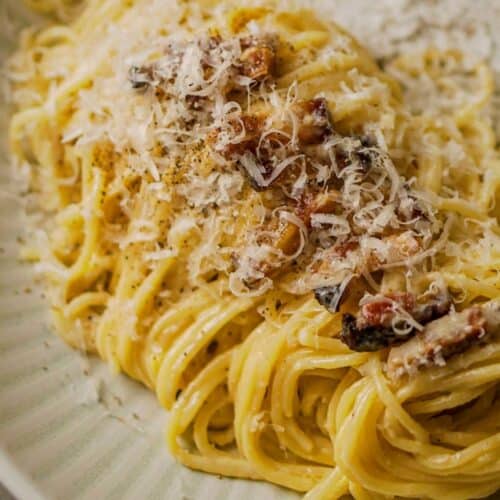
There are few dishes in Rome that inspire more passion than authentic spaghetti alla carbonara. This traditional carbonara recipe was born in the heart of Lazio, where simple ingredients transform into something unforgettable. My earliest memory of carbonara is watching Nonna cook it with complete confidence. No cream. No shortcuts. Only eggs, guanciale, Pecorino Romano, and black pepper coming together in a silky sauce that clings to every strand of pasta.
She taught me that carbonara rewards technique, not complexity. The sound of guanciale sizzling in the pan, the aroma of sharp Pecorino, and the way the hot pasta melts the eggs into a glossy sauce creates a moment you never forget. Today I will show you how to make carbonara the Roman way so you can enjoy this iconic dish at home with full Italian authenticity.

Authentic spaghetti alla carbonara has no cream. The creamy texture comes from eggs, Pecorino Romano, starchy pasta water, and crispy guanciale.
Key Takeaways
- Authentic Spaghetti alla Carbonara is a traditional Roman dish made with eggs, guanciale, Pecorino Romano, and black pepper, without cream.
- This recipe emphasizes technique, using starchy pasta water for creaminess, and it takes about 25 minutes to prepare.
- Key ingredients include 8 ounces of spaghetti, 3 ounces of guanciale, and 1 cup of finely grated Pecorino Romano.
- Follow detailed step-by-step instructions to achieve the perfect creamy sauce without scrambling the eggs.
- Enjoy this dish as part of a classic Italian meal, pairing it with Frascati wine and serving it immediately for optimal taste.
Jump to:
- Authentic Spaghetti alla Carbonara: A Creamy Roman Classic Made the Traditional Italian Way
- Key Takeaways
- Fast Facts
- Ingredients
- Equipment
- Get Your Free Starter Guide
- Step-by-Step Instructions
- Why You'll Love This Authentic Spaghetti alla Carbonara Recipe
- Notes & Authentic Tips For Your Italian Dish
- Cultural & Historical Significance of Spaghetti alla Carbonara
- Traditional Italian Meal Structure
- Pairing Suggestions for Your Carbonara Recipe
- Variations For Your Italian Dish
- How to Make Authentic Spaghetti alla Carbonara
- Frequently Asked Questions (FAQ)
- Nutritional Facts (per serving)
- Check Out Our Socials!
- Quick Tips for Success
Fast Facts
- Prep Time: 10 minutes
- Cook Time: 15 minutes
- Total Time: 25 minutes
- Servings: 2
- Difficulty Level: Easy
- Course: Primo
Ingredients
For the Carbonara
- 12 oz (340 g) spaghetti
- 4 oz (115 g) guanciale, sliced into small batons
- 3 large egg yolks
- 1 large whole egg
- 1 cup (100 g) Pecorino Romano, finely grated
- ½ cup (50 g) Parmesan cheese, finely grated
- 1 teaspoon freshly cracked black pepper
- Salt to taste
- 1 cup reserved pasta water
Equipment
Essential Tools Most Kitchens Already Have: These tools help beginners execute this traditional carbonara recipe with confidence.
- Large pot for boiling pasta
- Skillet or sauté pan for cooking guanciale
- Mixing bowl for whisking sauce
- Whisk for blending eggs and cheese
- Tongs to toss spaghetti
- Ladle to scoop pasta water
- Colander for draining pasta
- Cutting board and chef’s knife for slicing guanciale
- Measuring cups and spoons for accuracy
Specialty Italian Tools That Enhance the Dish: Perfect for cooks who want to elevate their Italian kitchen.
- Microplane grater for ultra-fine Pecorino Romano
- Stainless-steel skillet for better browning
- Wooden pasta fork for gentle tossing
- Digital thermometer to prevent scrambling (keep sauce under 150°F)
If you want to upgrade your Italian kitchen setup, explore our Italian Kitchen Essentials Guide for more tools that bring authentic Italian cooking to life.
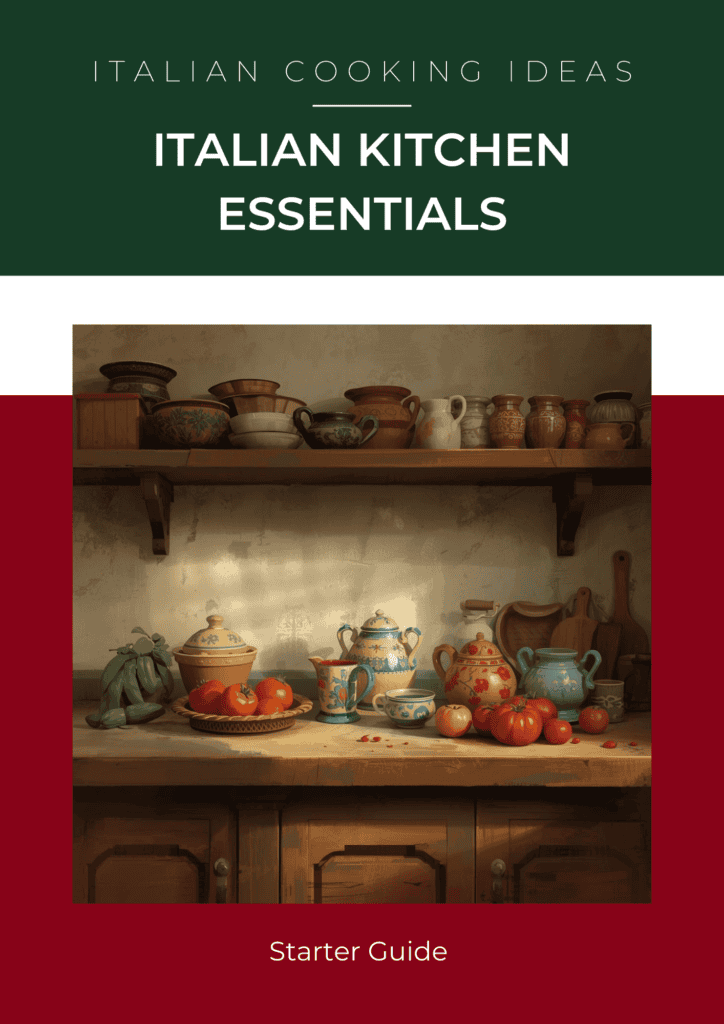
Get Your Free Starter Guide
The tools in your kitchen are just as essential as the ingredients on your plate.
Step-by-Step Instructions
1. Prepare the Guanciale
- Place a cutting board on your workspace and slice the guanciale into small pieces using a chef’s knife.
- Heat a skillet over medium heat, add the guanciale, and cook 5 to 7 minutes until crispy and golden.
- Turn off heat but keep the skillet warm.
2. Cook the Spaghetti
- Fill a large pot with water and bring to a boil. Salt it until it tastes like the sea.
- Add the spaghetti and cook until al dente.
- Before draining, use a ladle to scoop 1 cup of pasta water into a small bowl.
- Drain using a colander.
3. Make the Egg and Cheese Sauce
- In a mixing bowl, whisk together the egg yolks, whole egg, Pecorino Romano, Parmesan, and freshly cracked pepper.
- The mixture should be thick and creamy. Set aside near the stove so it stays warm.
4. Combine Pasta and Guanciale
- Transfer the hot spaghetti into the warm skillet with guanciale using tongs.
- Toss so the rendered fat coats each strand.
- If the pan cooled too much, warm it briefly on low heat, then turn off before continuing.
5. Create the Creamy Sauce (Off Heat)
- Pour the egg-and-cheese mixture over the pasta.
- Use tongs to toss quickly and continuously, adding warm pasta water a splash at a time.
- The sauce should become glossy, silky, and cling beautifully to the spaghetti.
- Signs of Success
- Too thick? Add more pasta water.
- Too loose? Keep tossing off heat until it tightens.
- Too hot? Pause. We do not scramble carbonara.
6. Finish and Serve
- Plate the pasta and finish with extra Pecorino Romano and more black pepper.
- Serve immediately for the true Roman experience.
Quick Tips for Success
- Always work off heat when adding eggs to prevent scrambling.
- Use guanciale for authenticity; pancetta works but changes the flavor.
- Fine-grate Pecorino Romano with a microplane for the smoothest sauce.
- Reserve more pasta water than you think; it’s your secret weapon.
- Serve immediately — carbonara is at its best the moment it’s made.
- Never add cream — traditional carbonara gets all its creaminess from eggs, cheese, and technique.
Why You'll Love This Authentic Spaghetti alla Carbonara Recipe
This recipe gives you the true Roman carbonara experience. Every bite delivers creamy sauce, crispy guanciale, and sharp Pecorino Romano. Because this is a traditional carbonara recipe, it stays faithful to Italian technique. No cream. No unnecessary ingredients. Only pure flavor and silky texture created by eggs and pasta water. It is fast, comforting, and impressive for guests. Most importantly, it lets you experience Italy from your own kitchen.
Notes & Authentic Tips For Your Italian Dish
Carbonara is simple, so technique matters. First, choose guanciale over bacon. The flavor is richer and more authentic. Use Pecorino Romano, never Parmesan, because its saltiness brings balance to the creamy sauce. When adding the egg mixture, always remove the pan from the heat to avoid scrambling. Toss constantly so the residual heat transforms the eggs into a silky sauce. If the sauce feels thick, add a spoonful of pasta water to loosen it. As Nonna always said, pasta water is liquid gold.
Cultural & Historical Significance of Spaghetti alla Carbonara
This traditional carbonara recipe is a cornerstone of Roman cuisine. Historians believe it emerged in the mid 20th century, inspired by shepherd dishes and Italy's postwar ingredients. What makes carbonara so iconic is its devotion to simplicity. Only five ingredients create a dish that feels luxurious yet rustic. Today, carbonara is one of the most beloved pastas in the world and a symbol of Roman culinary identity.
Traditional Italian Meal Structure
Did you know that every recipe you enjoy is part of a bigger story?
In Italy, carbonara is served as a primo, the pasta course that follows antipasto and prepares the palate for the meat course. Its richness makes it a centerpiece dish, perfect for a classic Italian meal. Learn more about how carbonara fits into a full Italian dinner in our Traditional Italian Meal Structure Guide.
Pairing Suggestions for Your Carbonara Recipe
- Wine: Frascati or Pinot Grigio
- Appetizer: Prosciutto e melone
- Side Dish: Simple arugula salad with lemon
- Dessert: Tiramisu for a full Roman-style finish
Variations For Your Italian Dish
- Swap spaghetti for rigatoni
- Use pancetta if guanciale is unavailable
- Add extra black pepper for a cacio e pepe twist
- Make it richer with an additional egg yolk
How to Make Authentic Spaghetti alla Carbonara
Frequently Asked Questions (FAQ)
No. Traditional carbonara recipe uses only eggs, Pecorino Romano, guanciale, and pasta water.
Yes. Pancetta is the closest substitute. Bacon works in a pinch, but the flavor will not be fully authentic.
Remove the skillet from heat before adding the egg mixture. Toss quickly and add pasta water as needed.
Spaghetti is traditional, but rigatoni or bucatini also work.
Carbonara is best eaten fresh. If needed, reheat gently with a splash of water.
You can, but the flavor is different. For authentic spaghetti alla carbonara, guanciale is best.
Nutritional Facts (per serving)
- Calories: 580
- Total Fat: 23 g
- Saturated Fat: 9 g
- Carbohydrates: 62 g
- Fiber: 3 g
- Sugars: 2 g
- Protein: 28 g
- Sodium: 720 mg
Values are approximate and may vary based on ingredients and portion size.
Dietary Tags: Nut Free, High Protein
Check Out Our Socials!
Loved This Authentic Spaghetti alla Carbonara Recipe? Let’s Keep Cooking Together!
If you try this recipe, share your creations and tag #ItalianCookingIdeas on:
📬 Want more? Get Weekly Italian Recipes in Your Inbox. Authentic recipes, cooking tips, and behind-the-scenes stories straight from our kitchen. Subscribe here.
Spaghetti alla Carbonara
Ingredients
- 12 oz 340 g spaghetti
- 4 oz 115 g guanciale, sliced into small batons
- 3 large egg yolks
- 1 large whole egg
- 1 cup 100 g Pecorino Romano, finely grated
- ½ cup 50 g Parmesan cheese, finely grated
- 1 teaspoon freshly cracked black pepper
- Salt to taste
- 1 cup reserved pasta water
Equipment
- Large pot for boiling pasta
- Skillet or sauté pan for cooking guanciale
- Mixing Bowl for whisking sauce
- Whisk for blending eggs and cheese
- Tongs to toss spaghetti
- Ladle to scoop pasta water
- Colander for draining pasta
- Cutting board and chef’s knife for slicing guanciale
- Measuring cups and spoons for accuracy
- Microplane grater for ultra-fine Pecorino Romano
- Stainless-steel skillet for better browning
- Wooden pasta fork for gentle tossing
- Digital thermometer to prevent scrambling (keep sauce under 150°F)
Instructions
- Place a cutting board on your workspace and slice the guanciale into small pieces using a chef’s knife.
- Heat a skillet over medium heat, add the guanciale, and cook 5 to 7 minutes until crispy and golden.
- Turn off heat but keep the skillet warm.
- Fill a large pot with water and bring to a boil. Salt it until it tastes like the sea.
- Add the spaghetti and cook until al dente.
- Before draining, use a ladle to scoop 1 cup of pasta water into a small bowl.
- Drain using a colander.
- In a mixing bowl, whisk together the egg yolks, whole egg, Pecorino Romano, Parmesan, and freshly cracked pepper.
- The mixture should be thick and creamy. Set aside near the stove so it stays warm.
- Transfer the hot spaghetti into the warm skillet with guanciale using tongs.
- Toss so the rendered fat coats each strand.
- If the pan cooled too much, warm it briefly on low heat, then turn off before continuing.
- Pour the egg-and-cheese mixture over the pasta.
- Use tongs to toss quickly and continuously, adding warm pasta water a splash at a time.
- The sauce should become glossy, silky, and cling beautifully to the spaghetti.
- Plate the pasta and finish with extra Pecorino Romano and more black pepper.
- Serve immediately for the true Roman experience.
Nutrition
Notes
Quick Tips for Success
- Always work off heat when adding eggs to prevent scrambling.
- Use guanciale for authenticity; pancetta works but changes the flavor.
- Fine-grate Pecorino Romano with a microplane for the smoothest sauce.
- Reserve more pasta water than you think; it’s your secret weapon.
- Serve immediately — carbonara is at its best the moment it’s made.
- Never add cream — traditional carbonara gets all its creaminess from eggs, cheese, and technique.

Richard says
Delicious and so easy to make