
Your trusted guide to authentic Italian cooking
How to Eat in Italy Like a Local and Avoid Common Dining Mistakes
Planning a trip to Italy? Learn the dining customs, restaurant etiquette, and meal traditions that help you eat with confidence and appreciate Italian food the way locals do.
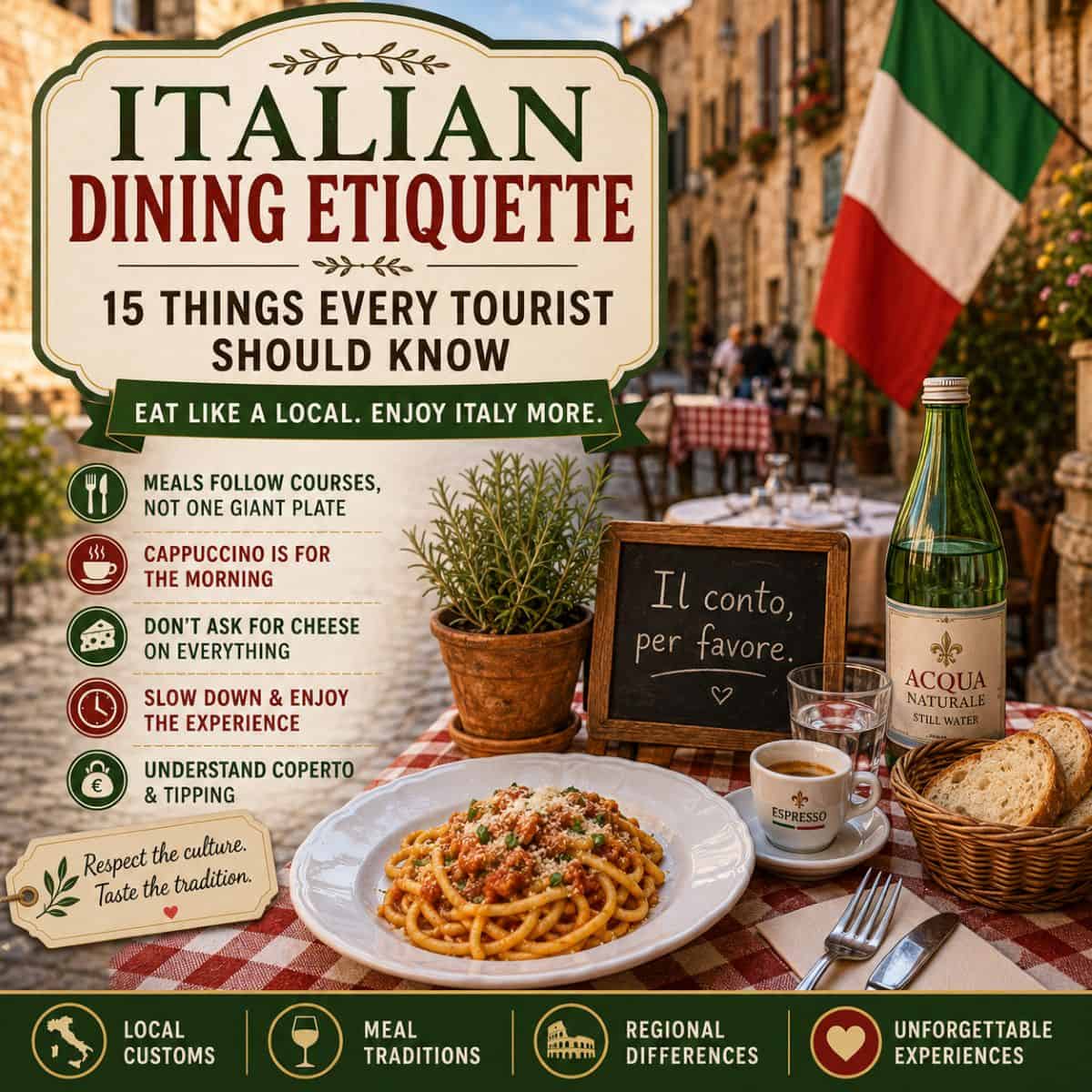
If you're dining in Italy for the first time, remember these five simple rules:
- Meals are meant to be enjoyed slowly, not rushed.
- Italian meals are served in courses, not as one giant plate.
- Cappuccino is usually enjoyed in the morning. After a meal, most Italians order an espresso.
- Don't automatically ask for grated cheese, especially on seafood pasta.
- Trust the chef. Traditional recipes are carefully balanced and usually aren't heavily customized.
Dining in Italy isn't about memorizing rules.
It's about understanding the rhythm of the meal.
What You'll Learn
By the end of this lesson, you'll understand:
✓ How an authentic Italian meal is structured
✓ Why service feels slower than many visitors expect
✓ Common restaurant customs tourists often misunderstand
✓ How to order with confidence
✓ The dining traditions that make eating in Italy so memorable
Dining In Italy Isn't About Eating Faster
Many first-time visitors arrive in Italy expecting dinner to work much like it does at home.
Order.
Eat.
Pay.
Leave.
Italian dining follows a different rhythm.
A restaurant isn't simply a place to satisfy your hunger.
It's a place to slow down.
To reconnect.
To enjoy good food with family and friends.
Conversation isn't something that happens while waiting for the meal.
It is part of the meal.
That's why no one rushes you.
Servers won't constantly interrupt your conversation.
The table is yours until you're ready to leave.
Once you stop expecting speed, you'll begin appreciating something much more valuable.
Presence.
The Italian Way
Italian restaurants don't measure success by how quickly they turn over tables.
They measure it by whether guests leave feeling satisfied, relaxed, and eager to return.
Understanding The Italian Meal
One of the biggest surprises for many visitors is discovering that an authentic Italian dinner isn't built around one oversized entrée.
Instead, the meal unfolds in a series of courses.
Each has its own purpose.
Each contributes to the experience.
A traditional meal may include:
Antipasto
Small bites that awaken the appetite.
Cured meats.
Cheeses.
Marinated vegetables.
Seafood.
Primo
Usually pasta, risotto, gnocchi, or soup.
This is often the heart of the meal.
Secondo
The main protein.
Fish.
Chicken.
Beef.
Pork.
Lamb.
Contorno
A vegetable or side dish served separately.
Unlike many countries, vegetables aren't automatically placed beside the meat.
They're ordered independently.
Dolce
Dessert.
Perhaps tiramisù.
Gelato.
Panna cotta.
Or a simple seasonal fruit.
Finally...
Coffee.
Usually a small espresso.
Not because the meal is ending quickly.
But because it's ending beautifully.
Did You Know?
Most Italians don't order every course every time they eat out.
A weekday lunch may simply be a primo and an espresso.
A Sunday family lunch may last several hours and include every course.
The meal adapts to the occasion.
Why Portions Feel Smaller
One of the first things visitors notice is the portion size.
Compared to many restaurants elsewhere in the world, Italian portions often seem modest.
That's intentional.
Italian meals aren't designed around one enormous plate.
They're designed around balance.
A lighter primo leaves room for a flavorful secondo.
A modest dessert feels satisfying rather than overwhelming.
By the end of the meal, you've enjoyed several carefully prepared courses instead of one oversized serving.
The result isn't less food.
It's a more complete dining experience.
Chef's Tip
If you're unsure how much to order, start with a primo.
You can always add another course.
It's much easier than ordering too much from the beginning.
Why Does Service Feel Slower?
One of the biggest surprises for first-time visitors isn't the menu.
It's the pace.
After your meal arrives, you may notice the server doesn't return every few minutes to ask if everything is okay.
They aren't ignoring you.
They're respecting your meal.
In Italy, uninterrupted conversation is considered part of good service.
The goal isn't to turn tables quickly.
The goal is to give guests the space to enjoy their food and the company around them.
You won't feel pressured to order dessert.
You won't be rushed into paying.
And you certainly won't feel like someone is waiting for your table.
The restaurant is inviting you to slow down.
Not hurry up.
The Italian Way
In Italy, a great meal isn't measured by how quickly it's served.
It's measured by how long people happily stay at the table.
Don't Wait For The Check
This catches many visitors by surprise.
After you've finished eating, the server usually won't bring the bill automatically.
That's intentional.
Presenting the check without being asked can feel like encouraging guests to leave.
Instead, your table remains yours until you're ready.
When you would like the bill, simply make eye contact with your server and politely ask:
"Il conto, per favore."
("The bill, please.")
It's a small difference, but understanding it helps you feel much more comfortable dining in Italy.
Did You Know?
Many Italian restaurants expect guests to linger after finishing their meal.
Conversation often continues well after the plates have been cleared.
For Italians, the meal ends when the people are ready, not when the food is gone.
Don't Expect Butter With Your Bread
Bread appears on almost every Italian table.
But it's not there for butter.
Instead, bread has a practical purpose.
It's meant to accompany the meal.
To enjoy with cured meats.
To pair with cheese.
Or to help gather the last bit of sauce from your plate, a tradition affectionately known as fare la scarpetta, or "making the little shoe."
You probably won't receive butter unless you're eating breakfast.
That's perfectly normal.
Bread is treated as another ingredient in the meal, not as an appetizer.
Don't Ask For Parmesan On Everything
Outside Italy, grated Parmesan often arrives automatically.
In Italy, it's different.
Cheese is added when it complements the dish.
Not simply because it's available.
For example:
✔ Ragù
✔ Lasagna
✔ Cacio e pepe
✔ Amatriciana
These often welcome grated cheese.
Seafood pasta generally does not.
The delicate flavor of shellfish or fish can easily be overwhelmed by aged cheese.
If the chef hasn't offered cheese, there's usually a reason.
Trust the balance they intended.
Chef's Tip
One of the easiest ways to experience authentic Italian cooking is to taste the dish exactly as it's served before asking for any additions.
Many recipes have already reached the balance the chef intended.
Why Italians Don't Order Cappuccino After Dinner
This is perhaps Italy's most famous dining custom.
Can you order a cappuccino after dinner?
Of course.
No one will stop you.
But most Italians wouldn't.
Milk-based coffee drinks are traditionally enjoyed during breakfast or earlier in the day.
After lunch or dinner, espresso is the preferred choice.
It's small.
Strong.
Quick.
And considered the perfect conclusion to a meal.
This isn't a strict rule.
It's simply part of Italy's dining rhythm.
The Italian Way
Italian food culture isn't built on rigid rules.
It's built on habits that have developed naturally over generations.
Understanding those habits helps you appreciate the experience rather than simply imitate it.
Can You Customize Your Order?
This is another area where expectations sometimes differ.
In many countries, restaurant menus are treated like suggestions.
In Italy, they're treated more like completed works.
Recipes often represent generations of regional tradition.
Each ingredient has been chosen for a reason.
That doesn't mean accommodations are impossible.
If you have allergies or dietary restrictions, restaurants are generally happy to help.
But requesting several substitutions simply because of personal preference may feel unusual.
The best approach?
Order something that already appeals to you.
Then let the chef do what they do best.ty.
Remember This
Italian dining isn't about getting exactly what you imagined.
It's about discovering why generations of Italians have enjoyed the dish exactly as it is.
Should You Tip In Italy?
One of the most common questions travelers ask is whether tipping works the same way it does in the United States.
The short answer is no.
Tipping isn't expected in Italy in the same way it is elsewhere.
Restaurant staff are paid differently, and good service isn't built around earning a larger tip.
If you receive exceptional service, leaving a few extra euros is always appreciated.
But there is no expectation to calculate 15 or 20 percent of the bill.
In many restaurants, you'll notice another charge instead.
It's called coperto.
Did You Know?
Coperto is a traditional cover charge that helps cover table service, bread, linens, and other dining costs.
It's not a tip, and it's usually listed clearly on the menu.
What Is Coperto?
Many visitors see an unfamiliar charge on the bill and immediately wonder if they've been overcharged.
In most cases, they haven't.
Coperto has been part of Italian dining for generations.
Depending on the restaurant, it's usually just a few euros per person.
Think of it as the cost of enjoying the table itself rather than paying for service.
You'll typically find the amount printed on the menu before you order.
Knowing about coperto ahead of time helps avoid unnecessary surprises and lets you enjoy your meal without worrying when the bill arrives.
The Italian Way
In Italy, dining is an experience rather than a transaction.
Coperto reflects the tradition of sitting, lingering, and enjoying the table, not simply purchasing food.
Still or Sparkling?
Soon after you're seated, your server will probably ask:
"Naturale o frizzante?"
They're asking which water you'd like.
Naturale is still water.
Frizzante is sparkling water.
Unlike some countries, complimentary tap water isn't automatically served in many Italian restaurants.
Instead, bottled water is the standard choice.
If you prefer tap water, you can certainly ask, but availability varies from one restaurant to another.
Knowing these two simple words makes ordering feel effortless.
Chef's Tip
If you're unsure, start with naturale.
It's the most familiar option for many travelers and pairs beautifully with almost every meal.
When Do Italians Eat?
Italian dining follows a rhythm that can feel surprisingly different from what many visitors expect.
Breakfast is usually light.
Perhaps a cappuccino and a pastry.
Lunch often begins around 12:30 to 2:00 p.m.
Dinner typically starts later than in many countries.
Many restaurants don't begin dinner service until 7:30 or 8:00 p.m., and locals often dine even later.
If you arrive at 5:30 expecting dinner, you may discover the restaurant hasn't opened yet.
Planning around local meal times helps you experience Italy as Italians do.
Did You Know?
Many family-run restaurants close for several hours during the afternoon before reopening for dinner service.
That break allows staff to prepare for the evening and spend time with their own families.
Every Region Has It's Own Table
One of the biggest mistakes travelers make is expecting the same menu everywhere they go.
Italy isn't one cuisine.
It's dozens of regional cuisines connected by shared values.
In Emilia-Romagna, you might find handmade tortellini and Parmigiano Reggiano.
Travel to Naples, and pizza becomes the centerpiece.
In Sicily, citrus, seafood, pistachios, and Arab influences shape the menu.
Visit Tuscany, and rustic soups, grilled meats, and unsalted bread tell a completely different story.
The farther you travel, the more you'll realize you're not simply visiting new cities.
You're discovering entirely different culinary traditions.
That's one of the greatest joys of eating your way across Italy.
The Italian Way
Italians don't ask,
"Where's the best Italian food?"
They ask,
"What's this region known for?"
Every destination has a story to tell through its ingredients.
While Your Enjoy Your Meal…
Take a moment before your first bite.
Look around the dining room.
Listen to the conversations.
Notice how no one seems to be in a hurry.
That's part of the experience.
If this guide has helped you feel more confident about dining in Italy, consider sharing it with someone who's planning their own Italian adventure.
Helping them avoid those first-day surprises might become one of the best travel tips you can give.
Why Italian Meals Feel Different
Visitors often return home saying the food in Italy tasted different.
Sometimes they credit the ingredients.
Sometimes the recipes.
Sometimes the wine.
Those things certainly matter.
But many travelers eventually realize something else made the experience unforgettable.
They weren't simply eating.
They were sharing time.
In Italy, meals create space for conversation.
Children remain at the table.
Friends linger long after dessert.
Grandparents tell stories.
Nobody is checking the clock.
Food becomes the reason people gather, but it isn't the only reason they stay.
That rhythm changes everything.
The pasta tastes better because no one is rushing through it.
The conversation lasts longer because no one is trying to leave.
The meal becomes part of the memory.
The Italian Way
Italian dining isn't designed to fit between appointments.
Appointments are expected to fit around the meal.
Food Is A Reflection Of It's Region
One of the greatest gifts Italy offers travelers is variety.
Drive just a few hours, and you'll discover completely different ingredients, traditions, and recipes.
In Bologna, handmade pasta and rich ragù tell the story of Emilia-Romagna.
In Florence, simple grilled meats and rustic bread reflect the countryside of Tuscany.
Along the Amalfi Coast, lemons, seafood, and olive oil shape nearly every menu.
Travel to Sicily, and you'll taste centuries of Greek, Arab, and Spanish influence in dishes filled with citrus, pistachios, eggplant, and fresh seafood.
Rather than searching for "the best Italian food," ask yourself:
"What is this region proud to serve?"
You'll almost always discover something unforgettable.
Did You Know?
Many classic Italian recipes were never intended to become national dishes.
They were created using the ingredients that grew best in one specific region, often becoming local traditions long before they became famous around the world.
Why Curiosity Always Tastes Better
The easiest way to enjoy dining in Italy isn't by memorizing etiquette.
It's by staying curious.
Order something you've never heard of.
Ask your server what the restaurant is known for.
Try the local wine.
Choose the regional pasta instead of searching for familiar favorites.
Some of your best meals may be the ones you never planned to order.
Italian dining rewards curiosity far more than certainty.
Chef's Tip
If a menu lists a regional specialty you've never tried, order it.
You're not just tasting a recipe.
You're tasting the history of that place.
Most Common Tourist Mistakes (And How to Fix Them)
Even experienced travelers occasionally make these mistakes.
Fortunately, they're easy to avoid.
Mistake: Expecting one oversized entrée
Instead: Enjoy the meal as a series of courses, choosing only the ones that appeal to you.
Mistake: Feeling rushed because the service is slower
Instead: Relax and enjoy the conversation. The slower pace is intentional.
Mistake: Waiting for the check to arrive
Instead: Ask politely when you're ready by saying, "Il conto, per favore."
Mistake: Ordering cappuccino after dinner without understanding the custom
Instead: Try an espresso and experience the meal as many Italians do.
Mistake: Automatically asking for Parmesan
Instead: Taste the dish first. If cheese isn't offered, there's often a culinary reason.
Mistake: Searching for the same food in every city
Instead: Let each region introduce you to its own traditions and specialties.
Remember This
The goal isn't to eat exactly like an Italian.
The goal is to understand why Italians enjoy meals the way they do.
Understanding creates appreciation.
Appreciation creates unforgettable experiences.
Still have questions? Here are the answers travelers ask most before dining in Italy.
FAQs: Italian Dining Etiquette
Authentic answers for every Italian cooking question.
Tipping isn't expected in the same way it is in the United States. If you receive exceptional service, leaving a few euros is appreciated, but it's entirely optional.
Coperto is a small cover charge that helps cover table service, bread, and other dining costs. It's not a tip and is usually listed on the menu.
In Italy, bringing the bill before it's requested can seem like rushing guests. Simply ask for "Il conto, per favore." when you're ready.
Yes. No one will stop you. However, most Italians prefer espresso after lunch or dinner, while cappuccino is traditionally enjoyed in the morning.
Not at all. However, certain dishes, especially seafood pasta, traditionally aren't served with cheese. If it's not offered, it's worth tasting the dish first.
Dinner often begins between 7:30 and 9:00 p.m., with many locals dining even later, especially during the summer months.
No. Many Italians order only a primo or a secondo during everyday meals. Full multi-course dinners are more common for celebrations, weekends, or leisurely family gatherings.
Some restaurants will provide tap water if requested, but bottled still or sparkling water is far more common.
Small requests are often possible, especially for dietary needs. Extensive substitutions, however, are less common because many dishes are served according to longstanding regional traditions.
The Italian Lesson
One of the greatest lessons Italy teaches has very little to do with recipes.
It teaches you how to make time.
Time for another course.
Time for another conversation.
Time for another story.
Italian dining reminds us that a meal isn't something to finish.
It's something to experience.
When you stop measuring dinner by how quickly it ends and start measuring it by the memories created around the table, you've begun to understand one of Italy's greatest traditions.
That's why people fall in love with dining in Italy.
Not because every meal is perfect.
But because every meal is given the chance to matter.
Your Next Lesson Awaits...
Every great Italian cook learns one technique at a time.
Italian food is about more than recipes. Continue exploring the traditions that shape every meal.
How Italians Approach Eating: The Joy of Slow Food
Discover why slowing down transforms not only meals but the entire Italian approach to food and family.
Italian Coffee Culture: Beyond Cappuccino
Learn when Italians drink cappuccino, why espresso ends the meal, and the traditions behind Italy's beloved coffee culture.
Italian Family Dining: Meals That Bring People Together
Explore how family, conversation, and tradition have shaped Italian dining for generations.
Italy's Regional Cuisines: A Journey Through Flavor
Travel from north to south and discover how geography creates Italy's incredible culinary diversity.

JOIN THE ITALIAN KITCHEN
Every great Italian meal begins with curiosity.
Every week you'll discover authentic recipes, practical techniques, ingredient guides, and the traditions behind Italy's greatest dishes.
✓ Cook authentic Italian recipes with confidence
✓ Master techniques used in Italian kitchens
✓ Learn ingredients that make every dish better
✓ Discover the traditions behind every recipe
From our kitchen to yours.
Every lesson at Italian Cooking Ideas is written to help you cook authentic Italian food with confidence, one technique at a time.
Until next time...
We'll see you in the kitchen.
Comments
No Comments