
Your trusted guide to authentic Italian cooking
One simple technique that transforms separate ingredients into one unforgettable Italian pasta dish.
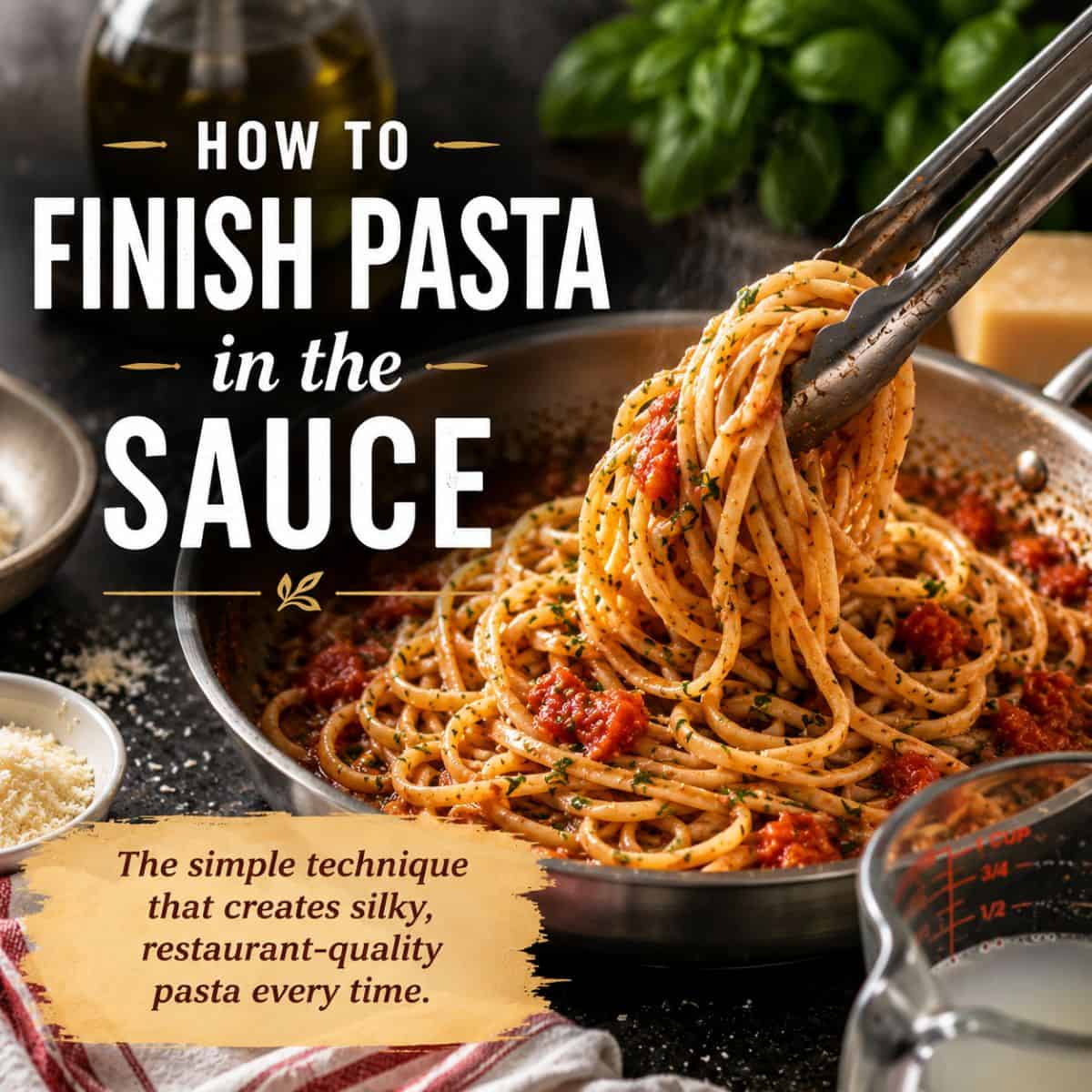
If you want pasta that tastes like it came from an Italian restaurant, don't drain it and spoon sauce over the top.
Instead, transfer the pasta directly into the sauce about one minute before it's fully cooked. Add a splash of reserved pasta water and gently toss everything together over medium heat until the sauce lightly coats every noodle.
This final minute allows the pasta, sauce, starch, and fat to become one cohesive dish instead of separate components on a plate.
What You'll Learn
By the end of this lesson, you'll understand:
✔ Why Italians always finish pasta in the sauce
✔ Why restaurant pasta tastes silkier than homemade pasta
✔ How pasta water naturally creates a glossy sauce
✔ When to transfer pasta from the pot to the pan
✔ The mistakes that stop sauce from clinging to pasta
Why Doesn't My Pasta Taste Like the Restaurant's?
It's one of the most common questions home cooks ask.
"I used the same pasta."
"I bought good olive oil."
"I even followed the recipe."
So why doesn't it taste the same?
The answer usually isn't the ingredients.
It's the last minute of cooking.
Many home cooks treat pasta and sauce like two separate recipes.
The pasta is boiled.
The sauce is heated.
Then they're brought together only after everything reaches the plate.
Italian cooks do something different.
They finish the pasta inside the sauce.
That single step transforms the entire dish.
Instead of sauce sitting on top of the noodles, every ingredient begins working together.
The starch released by the pasta naturally thickens the sauce.
The sauce begins clinging instead of sliding.
Every bite tastes balanced because every ingredient has become part of the same dish.
That's one of the quiet secrets behind authentic Italian pasta.
And once you learn it, you'll never look at a bowl of pasta the same way again.
The Italian Way
One of the biggest myths about pasta is that all of the salt ends up in your dinner.
It doesn't.
Most of the salt remains in the pot after the pasta is drained.
The pasta absorbs only a small amount while it cooks, which is exactly why properly seasoned water creates balanced flavor without making the finished dish taste overly salty.
Why Finishing Pasta in the Sauce Matters
Imagine serving a salad without tossing the dressing.
Some leaves would be coated.
Others would stay dry.
The flavors would never truly come together.
The same thing happens when pasta is plated first and sauce is spooned over the top.
The noodles remain one thing.
The sauce remains another.
When pasta finishes cooking inside the sauce, something completely different happens.
The heat encourages the starch on the pasta's surface to combine with the sauce.
The fat from olive oil, butter, or cheese begins blending with that starch.
The result is a silky coating that wraps around every piece of pasta instead of collecting underneath it.
Each bite delivers the same balance of pasta, sauce, and seasoning.
Nothing feels separate.
Everything feels intentional.
That's why authentic Italian pasta isn't assembled.
It's composed.
If you'd like to explore the philosophy behind this approach, continue with Mastering Italian Pasta: Salt, Sauce & Texture, where we introduce the Five Fundamentals of Italian Pasta.
Did You Know?
Many of Italy's most famous pasta dishes, including Cacio e Pepe and Carbonara, rely on this final step.
Without finishing the pasta in the sauce, they simply don't work the same way.
The Secret Ingredient Is Already In Your Pot
If there's one ingredient that separates restaurant-quality pasta from ordinary pasta, it probably isn't sitting in your pantry.
It's already in your pot.
Cloudy pasta water may not look impressive, but it's one of the most valuable ingredients in Italian cooking.
As pasta cooks, it releases starch into the water. That starch becomes the bridge between the pasta and the sauce, helping fat and liquid combine into one smooth, silky coating.
Without it, many sauces remain thin or separate on the plate.
With it, the sauce clings naturally to every noodle.
That's why experienced Italian cooks never drain the pot without first saving some of that cloudy water.
It isn't waste.
It's part of the recipe.
If you've ever wondered why restaurant pasta looks glossy without being heavy, this is one of the biggest reasons.
Continue Learning → The Right Way to Salt Pasta Water
Did You Know?
Professional Italian kitchens often refer to pasta water as "liquid gold."
Not because of its color...
But because a few tablespoons can completely transform the texture of a sauce.
How To Finish Pasta In The Sauce
The technique itself is surprisingly simple.
What matters is the timing.
Step 1
Cook the pasta until it's about one minute shy of al dente.
It should still have a slight firmness in the center because it will finish cooking in the sauce.
Step 2
Before draining the pasta, reserve about 1 cup of the cooking water.
You may not use it all, but you'll be glad it's there.
Step 3
Transfer the pasta directly into the pan with the warm sauce.
Avoid rinsing the pasta or letting it sit in a colander for long.
The starch on the surface is exactly what helps the sauce cling.
Step 4
Add a small splash of reserved pasta water and gently toss the pasta over medium heat.
Keep the pasta moving.
Watch how the sauce begins coating every noodle instead of pooling underneath it.
Step 5
Taste.
Adjust.
If the sauce feels too thick, add another splash of pasta water.
If it's too loose, continue tossing for another 20 to 30 seconds.
The goal isn't a thick sauce.
The goal is a sauce that hugs the pasta.
Chef's Tip
Keep a measuring cup or coffee mug next to the pot before you drain the pasta.
That simple habit makes it almost impossible to forget your reserved pasta water.
Timing Changes Everything
One minute doesn't sound like much.
In Italian cooking, it's often the difference between good pasta and unforgettable pasta.
Transfer the pasta too early, and it may remain undercooked.
Transfer it too late, and it can't absorb the sauce properly.
That final minute is where flavor, starch, and texture come together.
It's also why package cooking times should be treated as a guideline rather than a rule.
Your taste buds will always tell you more than the timer.
Begin tasting the pasta one to two minutes before the recommended cooking time.
When it offers gentle resistance, it's ready for the pan.
If you'd like to better understand this stage, our lesson on The Science of Perfect Pasta Texture explores exactly what al dente means and why it matters so much.
The Italian Way
Italian cooks don't ask,
"Is the timer finished?"
They ask,
"Is the pasta ready?"
Cooking with your senses instead of the clock is one of the biggest steps toward confidence in the kitchen.
Why Gentle Heat Matters
Once the pasta enters the sauce, resist the temptation to turn the burner up.
High heat can cause butter or olive oil to separate.
Cheese can become clumpy.
Delicate sauces can tighten too quickly.
Instead, keep the heat moderate and let the starch do the work.
Gently toss the pasta rather than stirring aggressively.
Within a minute or two, you'll notice the sauce becoming smoother, shinier, and more evenly distributed.
Italian cooking rewards patience.
The goal isn't speed.
It's balance.
This same principle appears throughout Italian cuisine, from building a soffritto to slowly reducing a tomato sauce. Small adjustments made with care almost always produce better results than rushing the process.
Continue Learning → Soffritto & Building Flavor the Italian Way
While Your Pasta Finishes…
Go give the pan a gentle toss.
Take a look at the sauce.
If it's clinging to every noodle, you're almost there.
If it still feels a little thick, add one more splash of reserved pasta water.
If it feels too loose, give it another 20 seconds over the heat.
Trust what you see.
Trust what you taste.
Dinner comes first.
We'll save your seat.
And if this lesson helped answer a question you've wondered about before, consider sharing it with someone who has ever asked,
"Why doesn't my pasta taste like it does in Italy?"
Some of the best cooking tips aren't recipes.
They're techniques passed from one kitchen to another.
Why This Techniques Changes Everything
At first glance, finishing pasta in the sauce seems like a small detail.
After all, it's only another minute or two in the pan.
Yet that final minute changes nearly every part of the dish.
The pasta continues absorbing flavor as it finishes cooking.
The starch released from the noodles begins binding with the fat in the sauce.
Olive oil, butter, cheese, and pasta water stop behaving like separate ingredients and begin working together.
This process is called emulsification.
The word may sound technical, but the result is something you've probably noticed before.
A glossy sauce.
Silky texture.
No puddle collecting at the bottom of the bowl.
Every noodle coated evenly from the first bite to the last.
That's the quiet magic happening in the pan.
It's not complicated.
It's simply understanding how ingredients naturally work together.
Did You Know?
Many people believe restaurant pasta is creamier because chefs add heavy cream.
In reality, many classic Italian dishes, including Cacio e Pepe, Carbonara, and Aglio e Olio, become silky through proper emulsification, not cream.
Technique creates richness.
Not extra ingredients.
Why Restaurant Pasta Feels Silkier
One of the biggest differences between restaurant pasta and homemade pasta isn't the recipe.
It's confidence.
Professional cooks don't wait until the food reaches the plate to bring everything together.
They build the dish inside the pan.
Every adjustment happens before serving.
If the sauce feels too thick...
They add a splash of pasta water.
If it feels too loose...
They continue tossing for another few seconds.
If it needs brightness...
They finish with fresh herbs or a drizzle of olive oil.
Nothing is left to chance.
That's why restaurant pasta often feels smoother, lighter, and more balanced.
Not because professional kitchens have secret ingredients.
Because they pay attention during the final minute.
The same attention is available in every home kitchen.
The Italian Way
Italian cooks don't ask,
"Is the sauce finished?"
They ask,
"Is the dish finished?"
There's an important difference.
The sauce isn't complete until it becomes part of the pasta.
What If Something Goes Wrong
Even experienced cooks occasionally need to make small adjustments.
That's part of cooking.
The key is knowing what the dish is telling you.
The sauce looks watery.
Continue tossing gently over medium heat for another 20 to 30 seconds.
The starch will naturally help tighten the sauce.
The sauce feels too thick.
Add one tablespoon of reserved pasta water at a time until the sauce loosens and coats the pasta evenly.
The cheese clumped together.
The pan was probably too hot.
Remove it from the heat before adding aged cheeses like Parmigiano Reggiano or Pecorino Romano, then toss using the residual warmth.
I forgot to save pasta water.
Don't panic.
Your pasta can still be delicious.
Use a small splash of warm water if needed, but remember that it won't contain the same starch.
The sauce may not become quite as silky, but the lesson simply becomes something to remember next time.
Italian cooking isn't about perfection.
It's about learning through repetition.
Common Mistakes (And How to Fix Them)
Mistake: Draining every drop of pasta water
Instead: Always reserve about one cup before draining.
Mistake: Rinsing cooked pasta
Instead: Transfer it directly into the sauce while the starch is still on the noodles.
Mistake: Turning the heat too high
Instead: Gentle heat gives starch time to work naturally.
Mistake: Adding all the pasta water at once
Instead: Add small splashes while tossing so you stay in control of the sauce's consistency.
Mistake: Spooning sauce over plated pasta
Instead: Finish the pasta inside the pan so every noodle is coated before it reaches the plate.
Remember This
Italian pasta isn't finished when it's drained.
It's finished when the pasta and sauce become one.
Still curious? Let's answer the questions home cooks ask most, along with a few they often don't think to ask until they're standing in the kitchen.
FAQs: How to Finish Pasta in the Sauce
Authentic answers for every Italian cooking question.
Finishing pasta in the sauce allows the noodles to absorb flavor while starch from the pasta naturally binds the sauce. This creates a silky, cohesive dish instead of pasta with sauce simply poured over the top.
About one minute is usually enough. The pasta should be slightly under al dente when transferred so it finishes cooking while absorbing the sauce.
Pasta water contains starch that helps emulsify the sauce, making it smoother and helping it cling to every noodle without needing cream.
Your dish can still turn out well, but it may not have the same silky texture. A splash of warm water can help loosen a thick sauce, though it won't provide the same starch.
Yes. Fresh pasta benefits from the same technique, although it cooks much faster than dried pasta. Keep a close eye on the timing.
No. Rinsing removes the surface starch that helps the sauce cling naturally to the pasta.
The pasta was likely plated before finishing in the sauce, or there wasn't enough starch to help the sauce bind. Finishing the pasta in the pan with reserved pasta water solves this problem.
Almost every traditional Italian pasta sauce benefits from this method, from simple tomato sauces to butter-based, cheese-based, and olive oil-based preparations.
The Italian Lesson
One of the greatest strengths of Italian cooking is that it rarely asks you to do more.
Instead, it teaches you to do simple things better.
Finishing pasta in the sauce is the perfect example.
You're not adding another ingredient.
You're not buying another piece of equipment.
You're simply giving the ingredients one final minute to become something greater together.
That's a lesson that reaches far beyond pasta.
Italian cooking rewards patience over shortcuts.
Technique over excess.
Attention over complication.
Master that mindset, and you'll discover something remarkable.
Your meals won't just taste more authentic.
They'll begin to feel more intentional.
And that's the heart of Italian cooking.
Your Next Lesson Awaits...
Every great Italian cook learns one technique at a time.
Now that you've mastered one of the most important foundations of Italian pasta, continue building your confidence with these lessons:
Salt: The Foundation of Italian Flavor
Discover why seasoning is about balance rather than making food salty, and learn how Italian cooks build flavor one layer at a time.
Mastering Italian Pasta: Salt, Sauce & Texture
Learn the five fundamentals that transform ordinary pasta into authentic Italian dishes, from seasoning and texture to sauce integration.
How to Balance Salt, Fat & Acid Like an Italian Chef
Take the next step by learning how Italian cooks create harmony between seasoning, richness, and brightness in every dish.
The Right Way to Salt Pasta Water
Learn exactly when to salt pasta water, how much to use, and why this simple step creates flavorful pasta from the inside out.

JOIN THE ITALIAN KITCHEN
Every great Italian meal begins with curiosity.
Every week you'll discover authentic recipes, practical techniques, ingredient guides, and the traditions behind Italy's greatest dishes.
✓ Cook authentic Italian recipes with confidence
✓ Master techniques used in Italian kitchens
✓ Learn ingredients that make every dish better
✓ Discover the traditions behind every recipe
From our kitchen to yours.
Every lesson at Italian Cooking Ideas is written to help you cook authentic Italian food with confidence, one technique at a time.
Until next time...
We'll see you in the kitchen.

Comments
No Comments