
Your trusted guide to authentic Italian cooking
Discover the techniques Italian cooks use to create flavorful, perfectly balanced pasta every time.
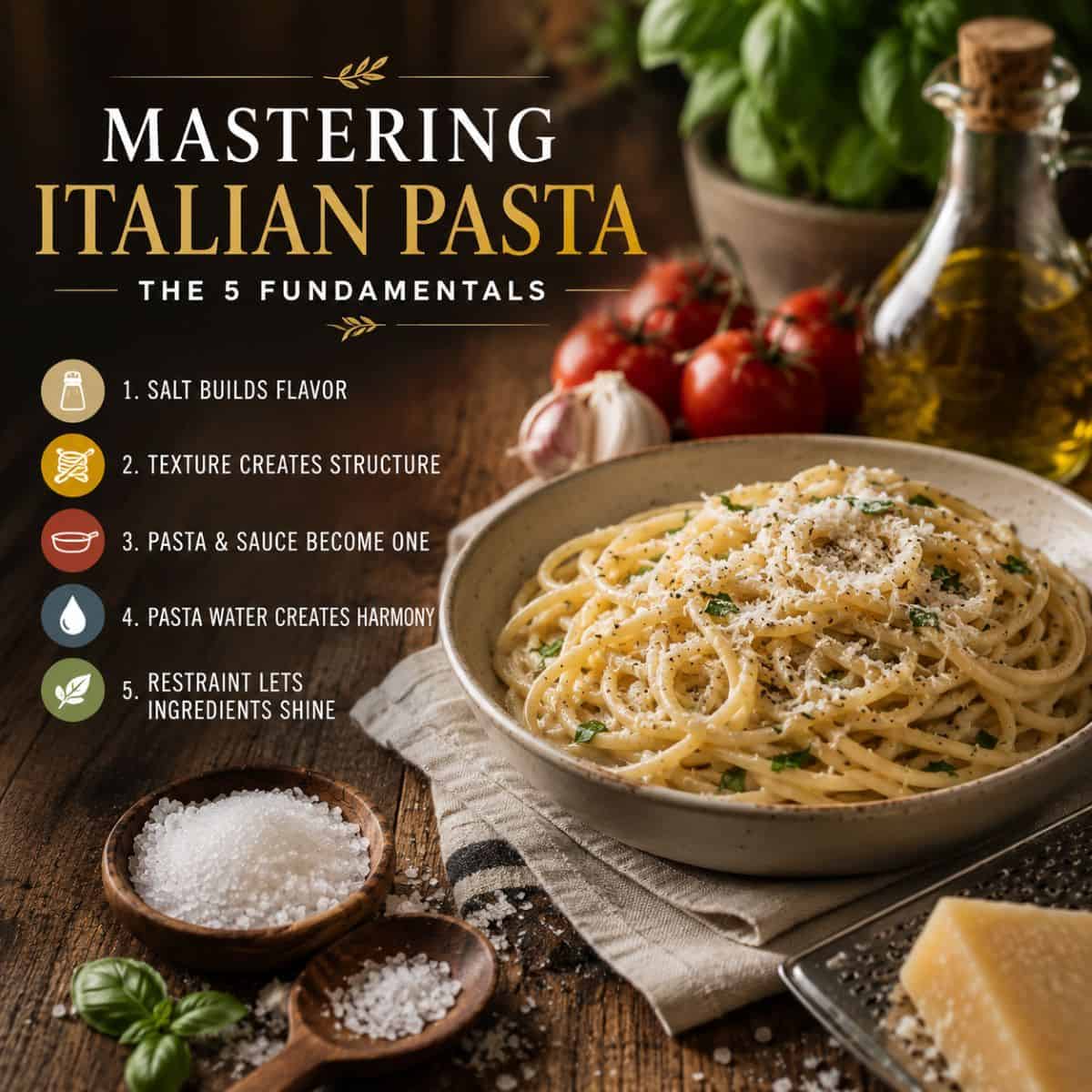
If you're wondering how to cook pasta the Italian way, focus on four fundamentals: generously salt the water after it reaches a rolling boil, cook the pasta until al dente, finish it in the sauce with reserved pasta water, and use restraint with ingredients. Authentic Italian pasta isn't about complicated recipes. It's about mastering a few simple techniques that work together.
What You'll Learn
By the end of this lesson, you'll understand:
✓ Why Italian pasta tastes different from most homemade pasta
✓ The five fundamentals every Italian cook follows
✓ How salt, sauce, texture, and timing work together
✓ The biggest pasta mistakes and how to avoid them
✓ How to cook pasta confidently, not just follow recipes
Why Italian Pasta Taste Different
Ask someone what makes incredible pasta and you'll hear plenty of answers.
Fresh ingredients.
Homemade sauce.
Imported cheese.
High-quality olive oil.
Those certainly help.
But ask an Italian cook, and you'll often hear something different.
Great pasta begins long before the sauce is finished.
It begins with dozens of small decisions that most people never notice.
How the water is seasoned.
When the pasta is tasted.
How long it stays in the pan with the sauce.
When the cheese is added.
None of these steps seem dramatic on their own.
Together, they create the pasta dishes people remember.
That is why authentic Italian pasta feels balanced instead of heavy.
Simple instead of complicated.
Intentional instead of accidental.
This lesson will show you those fundamentals one step at a time.
The Italian Way
Italian cooks don't rely on secret ingredients.
They rely on consistent technique.
The same handful of principles can improve almost every pasta dish you'll ever make.
The FIVE Fundamentals of Italian Pasta
Before learning individual recipes, learn the principles behind them.
Every authentic pasta dish rests on these five foundations.
1. Salt builds flavor.
Season the pasta itself before it ever meets the sauce.
2. Texture creates structure.
Perfectly cooked pasta should offer gentle resistance with every bite.
3. Sauce completes the pasta.
The sauce should coat each noodle, never drown it.
4. Pasta water creates harmony.
Starch helps the sauce cling naturally without heavy cream.
5. Restraint lets ingredients shine.
Italian cooking is rarely about adding more.
It's about making every ingredient matter.
Master these five principles, and hundreds of pasta recipes suddenly become easier to understand.
The First Fundamental: Salt Build Flavor
One of the biggest misconceptions about pasta is that the sauce provides all the flavor.
In reality, the noodle should already taste good before it ever touches the sauce.
That's because pasta absorbs seasoned water as it cooks.
If the water is bland, the pasta will be bland.
No amount of sauce can completely fix that afterward.
This is why Italian cooks season the water confidently instead of trying to rescue the dish later.
A well-seasoned noodle allows every other ingredient to do its job.
The tomatoes taste brighter.
The cheese tastes nuttier.
The herbs stay fresh instead of getting buried under extra salt.
The entire dish feels lighter because every ingredient shares the responsibility.
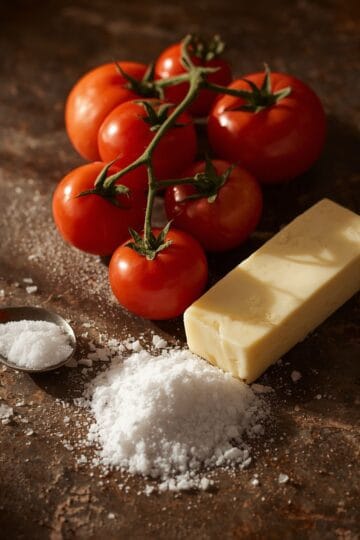
Continue Learning → Salt: The Foundation of Italian Flavor.
Did You Know?
The majority of the salt never reaches your plate.
Most of it stays behind in the cooking water.
The pasta absorbs only enough to season itself naturally.
That's why properly salted pasta tastes flavorful, not salty.
The Second Fundamental: Texture Creates Structure
You'll often hear Italians describe pasta as al dente.
It simply means "to the tooth."
But it means much more than following the package directions.
Properly cooked pasta offers gentle resistance when you bite into it.
It isn't hard.
It isn't soft.
It's alive.
That firmness allows the pasta to finish cooking inside the sauce without becoming mushy.
Overcooked pasta loses that structure.
Instead of carrying the sauce, it absorbs too much of it.
Every bite becomes heavy.
The best habit you can develop is simple.
Ignore the timer for a moment.
Taste the pasta.
Then taste it again.
Your palate is a far better guide than the clock.
Continue Learning → The Science of Perfect Pasta Texture
Chef's Tip
Start tasting your pasta about two minutes before the package says it's finished.
You can always cook it a little longer.
You can never undo overcooked pasta.
The Third Fundamental: Pasta and Sauce Become One
Many home cooks drain the pasta...
Place it in a bowl...
Then spoon sauce over the top.
Italian cooks rarely do that.
Instead, the pasta finishes cooking inside the sauce itself.
That final minute changes everything.
The starch released from the noodles combines with the fat in the sauce.
The sauce begins clinging to every piece of pasta instead of sliding to the bottom of the bowl.
Nothing feels separate anymore.
Everything becomes one dish.
That's why restaurant pasta often tastes smoother, richer, and more balanced.
It isn't because of secret ingredients.
It's because of this final step.
Reserve a cup of pasta water before draining.
Transfer the pasta directly into the sauce.
Add small splashes of the reserved water while tossing everything together over gentle heat.
Watch how the sauce transforms.
The Italian Way
Italian cooks don't think of pasta and sauce as two separate recipes.
They think of them as two ingredients that become one.
The Fourth Fundamental: Pasta Water Creates Harmony
Many home cooks think pasta water is simply something to pour down the drain.
Italian cooks see it differently.
That cloudy water is one of the most valuable ingredients in the kitchen.
As pasta cooks, it releases starch into the water.
When a splash of that starchy water is added to the sauce, something remarkable happens.
The starch helps the sauce and fat come together into one silky coating.
This process is called emulsification.
It sounds technical, but the result is easy to recognize.
Instead of watery sauce sitting underneath the pasta...
Every noodle becomes evenly coated.
That's why authentic Italian pasta looks glossy rather than greasy.
The secret isn't more cream.
It's understanding how starch naturally creates harmony.
If you've ever wondered why restaurant pasta feels so smooth without tasting heavy, this is one of the biggest reasons.
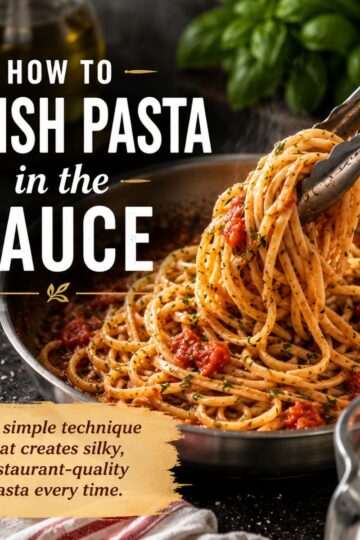
Continue Learning → The Best Way to Finish Pasta "in the Sauce".
Chef's Tip
Reserve about one cup of pasta water before draining.
You probably won't use all of it.
But you'll be glad you have it.
The Fifth Fundamental: Restraint Lets Ingredients Shine
One of the biggest surprises for new cooks is how few ingredients many classic Italian pasta dishes contain.
That's intentional.
Italian cooking isn't about adding everything that tastes good.
It's about choosing the few things that work beautifully together.
Too much garlic can overpower sweet tomatoes.
Too much cheese can hide delicate herbs.
Too much sauce can bury perfectly cooked pasta.
Great Italian cooking asks a simple question before every addition:
"Does this improve the dish?"
If the answer is no...
Leave it out.
Confidence often looks like adding less, not more.
The goal is harmony.
Not abundance.
That's why recipes like Cacio e Pepe, Aglio e Olio, and Carbonara rely on only a handful of ingredients.
Every ingredient has a purpose.
Every ingredient earns its place.
The Italian Way
Italian cooking celebrates simplicity.
The fewer ingredients you use, the more carefully each one must be treated.
Quality replaces quantity.
Technique replaces excess.
While Your Pasta Cooks…
Go give your pasta a quick stir.
If it's been cooking for several minutes, taste one piece.
You're looking for a slight firmness in the center.
Not quite there yet?
Perfect.
Put it back on the heat and we'll keep your seat warm.
If this lesson has already helped answer a question you've searched for before, now is a great time to share it with someone who loves Italian food.
Some of the best kitchen traditions begin with someone saying,
"You have to see how the Italians do this.""
Why Restaurant Pasta Taste Different
One of the questions we hear most often is,
"Why does restaurant pasta always taste so much better than mine?"
Most people assume the answer is expensive ingredients or secret recipes.
The truth is far less mysterious.
Restaurant kitchens rarely rely on secrets.
They rely on consistency.
Every pot of water is seasoned.
Every batch of pasta is tasted before it's drained.
Every sauce is adjusted, not guessed.
Every plate is finished with intention.
Professional cooks repeat the same small habits hundreds of times until they become second nature.
That's why restaurant pasta feels effortless.
The techniques are simple.
The consistency is exceptional.
The encouraging news is that these are the very same habits you can practice at home.
You don't need professional equipment.
You don't need imported ingredients.
You simply need to pay attention to the little details that most people overlook.
As those habits become routine, you'll notice something remarkable.
Your pasta begins tasting less like a recipe...
...and more like something served in an Italian kitchen.
Did You Know?
Many Italian chefs taste their pasta before it ever reaches the sauce.
If the noodle doesn't taste good on its own, they know the finished dish never will.
The sauce isn't there to hide mistakes.
It's there to complete the meal.
Why The Sauce Should Never Stand Alone
Have you ever noticed that restaurant pasta rarely has a puddle of sauce sitting underneath it?
That's intentional.
In Italian cooking, pasta and sauce are partners.
Neither should dominate the other.
The sauce should lightly coat every piece of pasta, allowing each bite to deliver balanced flavor from beginning to end.
When too much sauce is added, the pasta disappears.
When too little is used, the dish feels dry and unfinished.
The goal isn't abundance.
It's harmony.
That's why Italian cooks finish the pasta inside the sauce instead of pouring sauce over the top.
During those final moments, starch from the pasta and fat from the sauce combine naturally.
The result is a silky coating that clings to every noodle.
It doesn't look heavy.
It doesn't taste heavy.
It simply feels complete.
If you'd like to master this technique, continue with The Best Way to Finish Pasta "in the Sauce," where we break the process down step by step.
The Italian Way
Italian cooks don't ask,
"How much sauce should I add?"
They ask,
"Has the pasta and sauce become one?"
That small shift in thinking changes everything.
Common Pasta Mistakes (And How to Fix Them)
Even experienced home cooks make these mistakes from time to time.
Fortunately, each one has a simple solution.
Mistake: Trusting the Timer More Than Your Taste Buds
Package directions are helpful starting points.
They aren't guarantees.
Humidity, altitude, cookware, and pasta shape all influence cooking time.
Instead: Begin tasting your pasta one to two minutes before the suggested cooking time.
Your palate is the final judge.
Mistake: Rinsing the Pasta
Unless you're making a cold pasta salad, avoid rinsing cooked pasta.
Rinsing washes away the starch that helps sauce cling to every noodle.
Instead: Transfer the pasta directly from the pot into the sauce.
Mistake: Using Too Much Sauce
Authentic Italian pasta isn't swimming in sauce.
The pasta should still be the star of the plate.
Instead: Add just enough sauce to coat each noodle evenly.
Mistake: Adding Cheese Over High Heat
High heat can cause aged cheeses like Parmigiano Reggiano and Pecorino Romano to clump or become greasy.
Instead: Remove the pan from direct heat before adding the cheese, then toss everything together using the pasta's residual warmth.
Remember This
Great pasta isn't created by one spectacular technique.
It's created by five simple habits repeated every single time you cook.
You've mastered the fundamentals. Now let's answer the questions home cooks ask most, along with a few they often don't think to ask until they're already standing at the stove.
FAQs: Mastering Italian Pasta
Authentic answers for every Italian cooking question.
Italian pasta isn't necessarily made with different ingredients. The difference usually comes from technique. Properly seasoning the water, cooking to al dente, finishing the pasta in the sauce, and using restraint all contribute to a more balanced dish.
This is one of the most repeated pieces of cooking advice, but it's often misunderstood. Your pasta water should taste pleasantly seasoned, similar to a light broth. If it tastes overwhelmingly salty, you've probably added too much.
Finishing pasta in the sauce allows starch from the noodles to combine with the sauce, creating a silky coating that clings naturally to every bite. It also gives the pasta a final opportunity to absorb flavor.
Pasta water contains starch released during cooking. Adding a splash to your sauce helps emulsify fats and liquids, creating a smoother, more cohesive sauce without adding cream.
Taste it. The center should offer slight resistance without feeling raw or crunchy. If it's completely soft, it's likely overcooked.
No. Rinsing removes the starch that helps the sauce adhere to the pasta. The only common exception is pasta intended for cold salads.
No. Olive oil floats on the surface of the water and does little to prevent sticking. Stirring the pasta during its first minute of cooking is much more effective.
The most common reason is under-seasoned cooking water. If the pasta itself lacks flavor, the sauce has to compensate, often leading to an unbalanced dish.
Absolutely. Restaurant-quality pasta depends more on consistent technique than expensive ingredients. Master the five fundamentals from this lesson, and you'll notice a dramatic improvement in every pasta dish you prepare.
The Italian Lesson
The greatest Italian pasta dishes aren't remembered because they contain the most ingredients.
They're remembered because every ingredient has a purpose.
A properly salted pot of water.
Pasta cooked to the perfect texture.
A sauce that clings instead of pools.
A splash of reserved pasta water.
A handful of freshly grated Parmigiano Reggiano added at just the right moment.
None of these techniques are complicated.
Yet together, they transform an ordinary dinner into something memorable.
That's one of the beautiful lessons hidden inside Italian cooking.
Excellence rarely comes from one dramatic decision.
It comes from dozens of thoughtful ones.
Master those small habits, and you won't just cook better pasta.
You'll begin cooking with greater confidence.
And confidence, more than any recipe, is what Italian kitchens have passed from one generation to the next..
Continue Learning
Every great Italian cook builds one technique at a time.
If you enjoyed this lesson, these guides are the perfect next step.
Salt: The Foundation of Italian Flavor
Discover why seasoning isn't about making food salty. It's about bringing every ingredient to life.
The Right Way to Salt Pasta Water
Learn exactly when, why, and how much salt to add for authentic Italian pasta every time.
How to Balance Salt, Fat & Acid Like an Italian Chef
Take the next step by learning how Italian cooks create harmony between seasoning, richness, and brightness in every dish.
Homemade Pasta Dough Anyone Can Master
Take the next step by learning how flour, eggs, kneading, and resting work together to create silky fresh pasta.

JOIN THE ITALIAN KITCHEN
Every great Italian meal begins with curiosity.
Every week you'll discover authentic recipes, practical techniques, ingredient guides, and the traditions behind Italy's greatest dishes.
✓ Cook authentic Italian recipes with confidence
✓ Master techniques used in Italian kitchens
✓ Learn ingredients that make every dish better
✓ Discover the traditions behind every recipe
From our kitchen to yours.
Every lesson at Italian Cooking Ideas is written to help you cook authentic Italian food with confidence, one technique at a time.
Until next time...
We'll see you in the kitchen.

Comments
No Comments