
Estimated reading time: 5 minutes

Slow cooking is used to build depth, tenderness, and integration of flavors, while fast cooking preserves freshness, texture, and natural brightness. The key is matching the cooking method to the ingredient. Tough ingredients benefit from time, while delicate ingredients require speed.
Time Is an Ingredient
In Italian cooking, time is not an afterthought. It is an ingredient.
Some dishes demand patience. Others demand speed. Mastery lies in knowing which is which.
Slow cooking builds depth and tenderness. Fast cooking preserves freshness and brightness. Confusing the two weakens flavor and texture.
Understanding this distinction strengthens every dish you prepare.
This mindset grows directly from how Italian cooking builds flavor layer by layer.
Read More: Soffritto & Building Flavor the Italian Way
When Slow Cooking Is Essential
Certain dishes require extended cooking to reach balance:
- Ragù alla Bolognese
- Braised meats
- Minestrone
- Tomato sauces that need sweetness to develop
Slow heat allows:
- Collagen to break down
- Acidity to mellow
- Aromatics to integrate fully
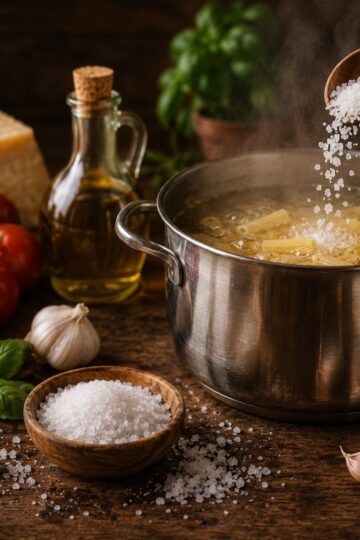
Patience transforms raw ingredients into cohesive flavor.This gradual development mirrors the discipline behind proper seasoning.
Read More: Salt: The Foundation of Italian Flavor
When Fast Cooking Is Correct
Other dishes rely on speed:
- Garlic sautéed briefly in olive oil
- Seafood pasta
- Fresh tomato sauces
- Simple vegetable preparations
Quick cooking preserves:
- Natural sweetness
- Bright color
- Delicate texture
Overcooking these ingredients removes their identity.
Italian cooking values ingredient integrity. Fast cooking protects it.This restraint reflects the broader philosophy of balance.
Read More: The Italian Way of Cooking: Instinct, Simplicity & Balance
Common Italian Cooking Timing Mistakes (and How to Fix Them)
Many cooks struggle not because of ingredients, but because of timing.
One common mistake is trying to speed up slow dishes. Increasing heat does not replace time. It only creates uneven cooking and shallow flavor.
Another mistake is treating all ingredients the same. Garlic is cooked like onions. Seafood is handled like meat. This removes the unique qualities each ingredient brings.
Overcooking is equally damaging. What should be fresh becomes dull. What should be tender becomes dry.
The result is food that feels heavy, flat, or disconnected.
When timing is respected, everything begins to align.
The Danger of Rushing Slow Dishes
If you rush a slow dish:
- Meat remains tough
- Sauce tastes sharp
- Aromatics feel separate instead of unified
Time cannot be replaced by higher heat.
Ragù cooked too quickly lacks depth. Soups feel thin. Braises taste incomplete. Soffritto teaches patience for this very reason.
Read More: Soffritto & Building Flavor the Italian Way
The Danger of Overcooking Fast Dishes
Overcooking quick preparations dulls them.
Seafood becomes rubbery. Garlic turns bitter. Fresh herbs lose aroma. Vegetables lose structure.
This is where understanding heat control becomes essential. Just as pasta must be cooked to the right texture, ingredients must be removed from heat at the right moment.
Read More: The Science of Perfect Pasta Texture
How to Know Which Cooking Method to Use
Before cooking, ask one question:
Does this ingredient benefit from breakdown, or preservation?
- Tough cuts of meat require time
- Root vegetables can handle slow transformation
- Tender seafood demands speed
- Fresh herbs prefer minimal heat
Technique must match ingredient structure.
When you understand this, decisions become natural rather than forced.
FAQs: Slow vs Fast Italian Cooking
Slow cooking develops deep, rich flavors over time, while fast cooking preserves freshness, texture, and natural taste.
Slow cooking is best for tough meats, sauces, and soups that need time to soften, develop sweetness, and integrate flavors.
Fast cooking is ideal for delicate ingredients like seafood, garlic, fresh vegetables, and light sauces that benefit from minimal heat.
Higher heat does not replicate time. It can cause uneven cooking, tough textures, and underdeveloped flavors.
It may not have cooked long enough to develop depth, or it may be missing balance between acidity, salt, and fat.
Garlic becomes bitter when overcooked. It should be lightly sautéed, not browned aggressively.
Ingredients lose texture, color, and flavor. Seafood becomes rubbery, vegetables become soft, and herbs lose aroma.
Treating all ingredients the same. Each ingredient requires a different approach based on its structure.
Yes. Many dishes combine both methods, such as slowly developing a sauce and quickly finishing pasta within it.
Pay attention to how ingredients respond to heat, taste often, and adjust based on texture and flavor rather than the clock alone.
Final Thought
Slow and fast cooking are not opposites. They are tools.
The Italian kitchen uses both with intention.
Cook slowly when depth must develop.
Cook quickly when freshness must shine.
Knowing the difference is not about tradition. It is about control.
And control defines mastery.
Key Takeaways
- Slow cooking builds depth and rich flavors, while fast cooking preserves freshness and texture in Italian cooking.
- Knowing when to slow cook or fast cook is essential for mastering Italian cuisine.
- Common mistakes include speeding up slow dishes or treating all ingredients the same, leading to uneven results.
- Overcooking can dull flavors, while undercooking can leave dishes unbalanced; timing is crucial.
- Understanding the ingredient's needs—whether it requires breakdown or preservation—guides your cooking approach.
Comments
No Comments