
Estimated reading time: 7 minutes
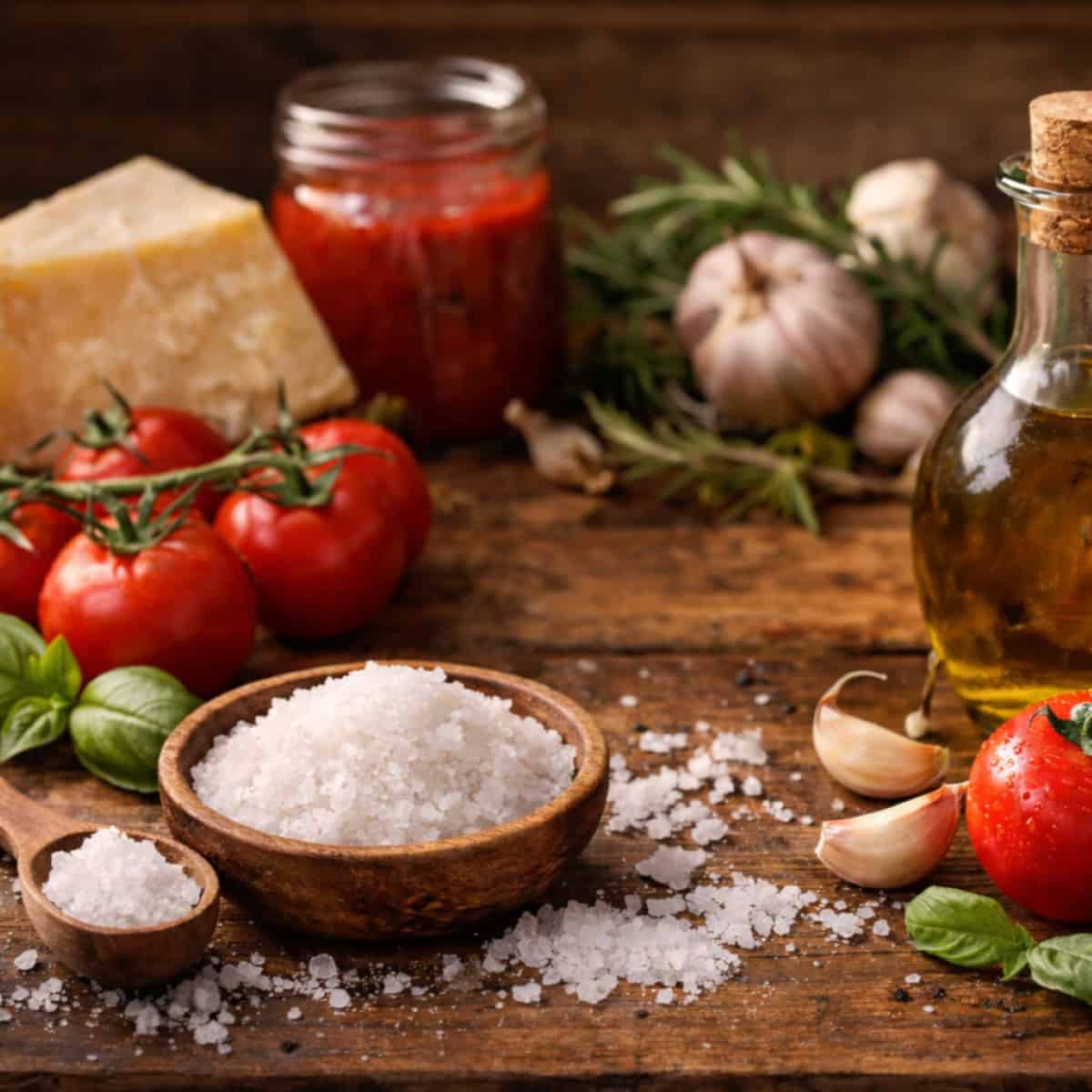
Italian cooking seasons food gradually rather than all at once. Salt is added in layers throughout cooking to build balance, clarify flavor, and support texture. Proper seasoning allows ingredients to taste more like themselves instead of simply making food taste salty.
The Most Powerful Quiet Ingredient
Salt does not shout. It does not appear dramatically in a finished dish. It rarely receives attention.
Yet in Italian cooking, salt determines whether food tastes alive or flat.
Without proper seasoning, even the finest tomatoes taste dull. The best olive oil feels muted. Perfectly cooked pasta still lacks clarity.
Salt is not decoration.
It is structure.
Understanding how to season Italian food properly is one of the most important steps toward authentic Italian cooking. This same discipline sits at the center of the broader Italian philosophy of balance, restraint, and awareness in the kitchen.
Read More: The Italian Way of Cooking: Instinct, Simplicity & Balance
Salt Is Structural, Not Salty
When used properly, salt does not simply make food taste salty.
It sharpens sweetness. It balances acidity. It clarifies savoriness.
Most importantly, it allows ingredients to taste more like themselves.
In Italian cooking, salt is added gradually:
- To aromatics as they soften
- To pasta water before boiling
- To sauces as they reduce
- To proteins before cooking
Layering salt prevents last-minute correction. It builds flavor naturally instead of forcing intensity at the end.
This mirrors the same slow layering that defines soffritto itself, where flavor develops quietly and patiently before the final dish ever comes together.
Read More: Soffritto & Building Flavor the Italian Way
Seasoning early creates cohesion.
Why Restaurant Pasta Tastes Better
Many people wonder why restaurant pasta tastes deeper, fuller, and more balanced than pasta made at home.
The answer is often not butter, cream, or extra ingredients.
It is seasoning structure.
Restaurants properly salt pasta water, layer seasoning throughout cooking, and finish pasta directly in the sauce so starch, salt, fat, and acidity integrate together.
Without those steps, pasta often tastes disconnected. The noodle remains bland while the sauce becomes overly salty in compensation.
Italian cooking avoids this imbalance by building flavor gradually instead of correcting it aggressively at the end.
The Critical Role of Salt in Pasta
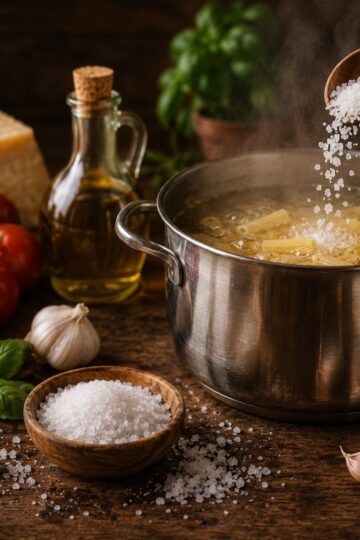
Pasta water must be seasoned properly. This is not optional.
If pasta absorbs bland water, the noodle itself remains flat. Adding extra salt to the sauce later cannot fully repair that imbalance.
Correct seasoning begins at the boil. Properly salted water creates flavor from within the pasta itself rather than coating flavor only on the outside.
Read More: The Right Way to Salt Pasta Water
When pasta finishes directly in the sauce, starch, salt, fat, and acidity emulsify together to create cohesion and structure. This final integration is one of the defining characteristics of authentic Italian pasta preparation.
Read More: Mastering Italian Pasta: Salt, Sauce & Texture
Salt supports texture as much as flavor.
Salt and Acidity: The Tomato Relationship
Tomatoes contain natural acidity. Without proper seasoning, that acidity often feels sharp or incomplete.
This is why many beginner sauces taste flat even when good ingredients are used.
Salt softens harshness while allowing sweetness and depth to emerge naturally.
Italian cooking relies on this balance instead of masking poor flavor with sugar or excessive seasoning.
A properly seasoned tomato sauce tastes rounded, structured, and cohesive rather than aggressively acidic.
Balance must come from technique, not correction.
Salt and Cheese
Aged cheeses such as Parmigiano Reggiano and Pecorino Romano contribute salinity of their own.
Adding salt carelessly before considering the cheese can quickly push a dish out of balance.
This is why Italian cooking depends heavily on awareness and timing rather than rigid measurement.
Cheese should strengthen structure quietly instead of dominating the dish. The moment cheese integrates into pasta also affects how salt, starch, and fat combine together.
Read More: The Best Way to Finish Pasta “in the Sauce”
Season with awareness.
Salt and Heat
Heat changes the perception of salt dramatically.
As sauces reduce, liquid evaporates while salt concentration increases.
This is why experienced cooks season lightly at first, then adjust gradually as cooking progresses.
Confidence develops through tasting repeatedly rather than making one aggressive correction at the end.That instinct-driven adjustment reflects the broader Italian understanding that control matters more than intensity.
Read More: The Italian Way of Cooking: Instinct, Simplicity & Balance
Fear of Salt Creates Bland Food
Many home cooks under-season because they fear ruining the dish.
Ironically, this often creates food that tastes heavy, dull, or incomplete.
Salt is not the enemy of balance.
Improper balance is.
When seasoning is layered carefully and adjusted gradually, food tastes clearer rather than saltier.
This is one reason authentic Italian cooking often feels more vibrant despite using fewer ingredients
Common Seasoning Mistakes
- Adding too much salt all at once
- Forgetting that anchovies, olives, cured meats, and cheese already contain salt
- Under-seasoning pasta water
- Attempting to fix blandness with finishing salt alone
- Tasting only at the end instead of throughout cooking
Italian cooking depends on adjustment, not reaction.
Salt should support harmony, never dominate it.
Types of Salt and Their Use
- Fine salt dissolves quickly and works well for sauces and pasta water
- Coarse salt is ideal for proteins before cooking
- Flake salt works best as a finishing texture rather than structural seasoning
The form changes the application, but the principle remains the same:
Control.
Why Salt Defines Mastery
Salt is one of the earliest lessons taught in Italian kitchens.
Not because it is complicated.
Because it reveals discipline.
When seasoning is correct:
- Pasta tastes defined
- Sauces taste complete
- Vegetables taste vibrant
- Proteins taste balanced
When seasoning is wrong, everything feels slightly disconnected.
Salt is often the quiet difference between average and exceptional cooking.
FAQs: How to Season Italian Food
Pasta usually tastes bland because the water was under-seasoned before boiling. Properly salted pasta water creates flavor within the noodle itself.
The water should taste noticeably seasoned but not overwhelmingly salty. Italian cooking relies on balanced seasoning rather than extremes.
Salt seasons the pasta internally while supporting starch and sauce integration later during finishing.
Tomato sauce often tastes flat when salt and acidity are unbalanced. Proper seasoning helps sweetness and depth emerge naturally.
Restaurants typically layer seasoning throughout cooking and finish pasta directly in the sauce for better integration and balance.
Italian cooking adds salt gradually in stages rather than all at once at the end.
When used correctly, salt enhances flavor clarity and balance more than simple saltiness.
Italian cooking often relies more on ingredient quality, balance, aromatics, and seasoning structure than heavy spice combinations.
Adding salt only at the end instead of layering it gradually throughout the cooking process.
Sometimes balance can be restored through dilution, starch, or acidity, but prevention through gradual seasoning is always better.
Final Thought
Italian cooking does not depend on exotic spices or heavy manipulation.
It depends on control.
Salt teaches control better than almost any other ingredient.
Use it early. Use it gradually. Taste often.
Master salt, and you master structure.
Key Takeaways
- Italians season food gradually, using layers of salt to enhance flavors and textures without overpowering them.
- Salt sharpens sweetness and balances acidity, allowing ingredients to taste more like themselves in Italian cooking.
- Properly salted pasta water creates flavor from within, preventing blandness and enhancing the overall dish integration.
- Avoid common seasoning mistakes, such as adding too much salt at once or under-seasoning pasta water for better results.
- Mastering salt is essential for authentic Italian cooking because it teaches control over balance and structure.
Comments
No Comments